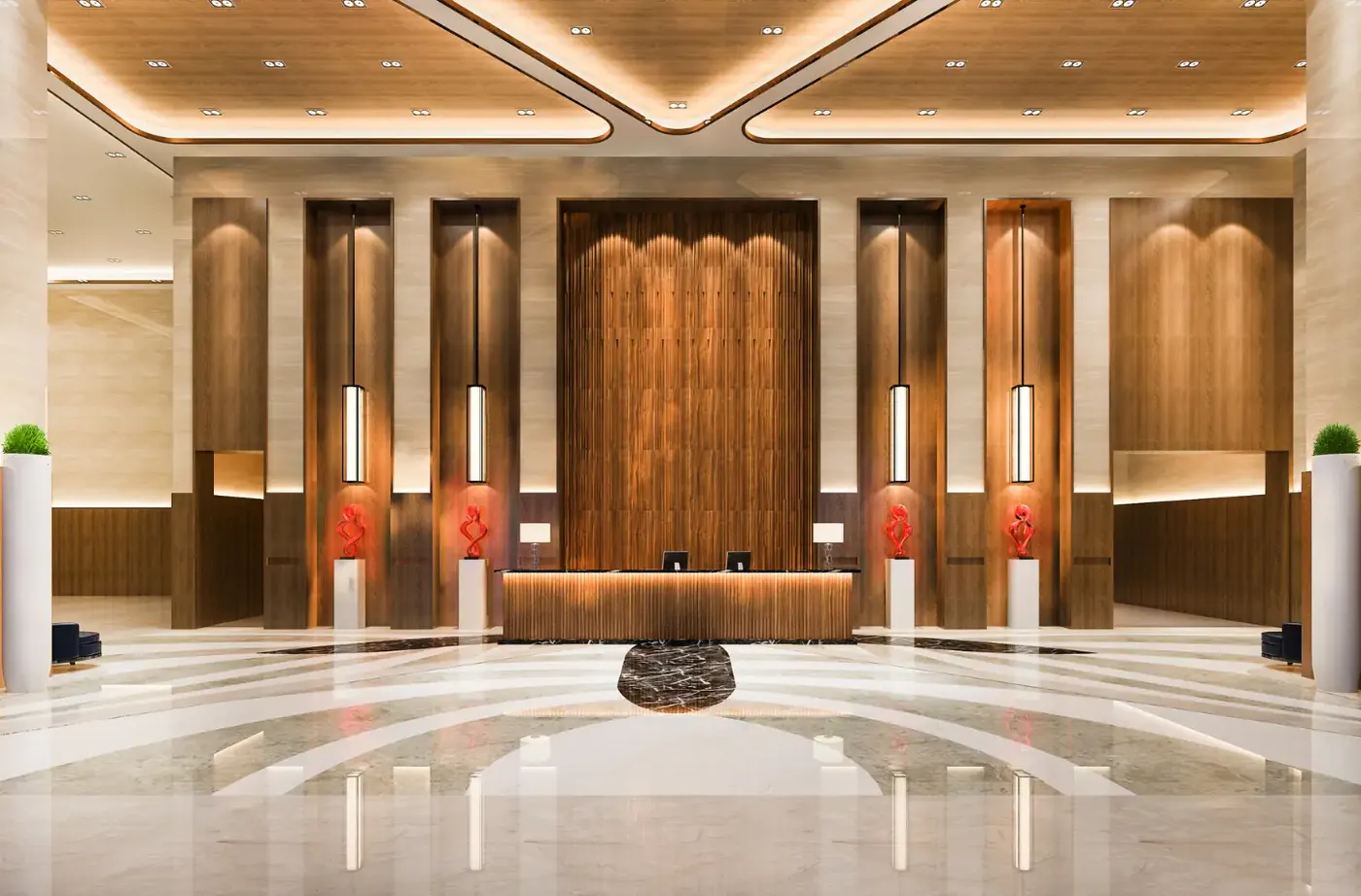
Office buildings
Tenant floors and end-of-trip facilities, often managed by building management for every floor at once.
Commercial and strata facilities management, Melbourne
Office Mon to Fri, 9:00 am to 5:00 pm info@goldenstar.au
Washrooms and amenities
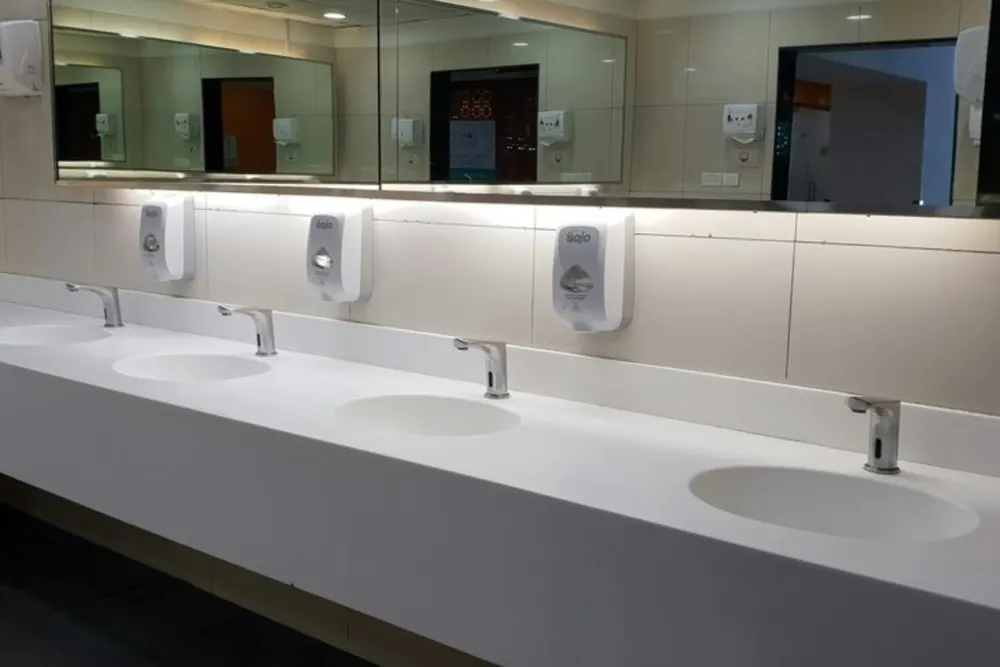
Hygiene services in Melbourne workplaces cover the washroom equipment that sits outside a normal clean: sanitary and nappy bins, soap and sanitiser dispensers, air fresheners, hand drying and urinal treatment, each serviced on a set cycle. Golden Star arranges washroom hygiene within its facilities management contracts and times it with your cleaning.
Bin exchange has its own page: sanitary bin services.
Scope
A washroom hygiene contract lists each unit, where it sits and how often it is serviced. These tabs show what is covered for each type of equipment.
Each full unit is swapped for a clean, lined one on a fixed cycle rather than emptied on site, so staff never handle the contents.
Exchange frequencies, unit types and disposal are set out on our sanitary bin page.
Sealed refill cartridges mean dispensers are never topped up from a bulk bottle, which can let bacteria build up inside the unit.
Fragrance hides a smell for a while. Lasting odour control comes from urinal treatment, clean drains and working extraction fans.
Empty dispensers cause more washroom complaints than almost anything else, and most people never report them.
Urinals cause the strongest odours in a commercial washroom, especially in high-traffic sites with shift workers.
Who it is for
Every workplace with staff or visitors needs hygiene equipment in its washrooms. The amount, and how often it is serviced, depends on who uses the building and how many.
Tenant floors and end-of-trip facilities, often managed by building management for every floor at once.
Public toilets with heavy weekend traffic, parents' rooms and accessible toilets that need nappy bins.
Shift workers using the same washrooms around the clock, so units fill faster and need more frequent service.
Student and staff toilets serviced outside class times, and nappy bins in childcare rooms.
Touch-free dispensers and sanitiser at every entry, matched to infection control routines.
Change rooms with showers, high humidity and constant use. Odour control matters as much as supply.
One contract
Washroom complaints mostly come down to empty dispensers and bad smells, and building users rarely report either. When hygiene, consumables and cleaning sit under one contract, the cleaner who finds an empty soap unit at night can replace the cartridge before morning.
The saving from bundling hygiene with Golden Star's commercial cleaning services depends on your site.
How it runs
Setting up a site takes four steps, and the first one is counting. Most hygiene quotes go wrong because nobody counted the cubicles properly.
We walk every washroom and record cubicles, basins, urinals and parents' rooms, plus roughly how many people use each one.
You receive a list of units by room, the service cycle for each and the monthly price before anything is installed.
Units are fitted on an agreed day, then serviced on schedule with every visit logged.
Bins that fill early or dispensers that run dry trigger a change to the cycle, so you are not paying for visits you do not need.
Price guide
Hygiene services are charged per unit per month, with the price depending on the unit and how often it is serviced. Refills are either included or charged by use, and the quote says which.
| Item | From | What changes the price |
|---|---|---|
| Sanitary bin | On quote | Exchange frequency and unit type |
| Soap or sanitiser dispenser | On quote | Refills included or charged by use |
| Air freshener unit | On quote | Refill cycle |
| Urinal sanitiser | On quote | Screen or cartridge type |
Before signing with any hygiene provider, check the contract term, the notice period and what happens at the end of the term, because automatic renewal clauses are common in this industry.
Under the Occupational Health and Safety Act 2004 (Vic), employers must provide adequate welfare facilities for workers. WorkSafe Victoria publishes a compliance code on workplace amenities that covers toilets, hand washing and sanitary disposal.
| Item | Detail |
|---|---|
| Employer duty | Adequate facilities for the welfare of employees under the OHS Act 2004 (Vic) |
| Amenities guidance | WorkSafe Victoria compliance code on workplace amenities and work environment |
| Sanitary waste | Available on request |
| Refill products | Safety data sheets supplied; see our product safety data sheets |
| Insurance | Certificates sit on our accreditations and insurance page |
Golden Star arranges washroom hygiene for workplaces across metropolitan Melbourne, from CBD office floors to factories and shopping centres in the south-east, and at some regional Victorian sites when capacity allows. See where we work in Melbourne.
If you are moving from another provider, send us your current unit list and contract end date.
Each unit has a monthly price that depends on its type and how often it is serviced. A site with a handful of washrooms costs far less than a centre with public toilets on every level, so we count the units before quoting.
Sanitary bins are usually exchanged every four weeks in an office and more often in busy public toilets. Soap, sanitiser and fragrance units are refilled on cycles set by how fast they empty.
Everyone who services your washrooms is inducted to your site rules and access arrangements.
Yes. Offices and schools are often serviced early in the morning or in the evening with the cleaning, and shopping centres before trading.
WorkSafe Victoria's amenities guidance expects a hygienic way to dispose of sanitary products in toilets used by women. In practice that means a sanitary unit in each female and accessible cubicle.
All of metropolitan Melbourne, plus some regional Victorian sites when there is capacity.
Tell us how many washrooms and cubicles you have and who services them now. We will count the units, look over your current contract terms and quote.