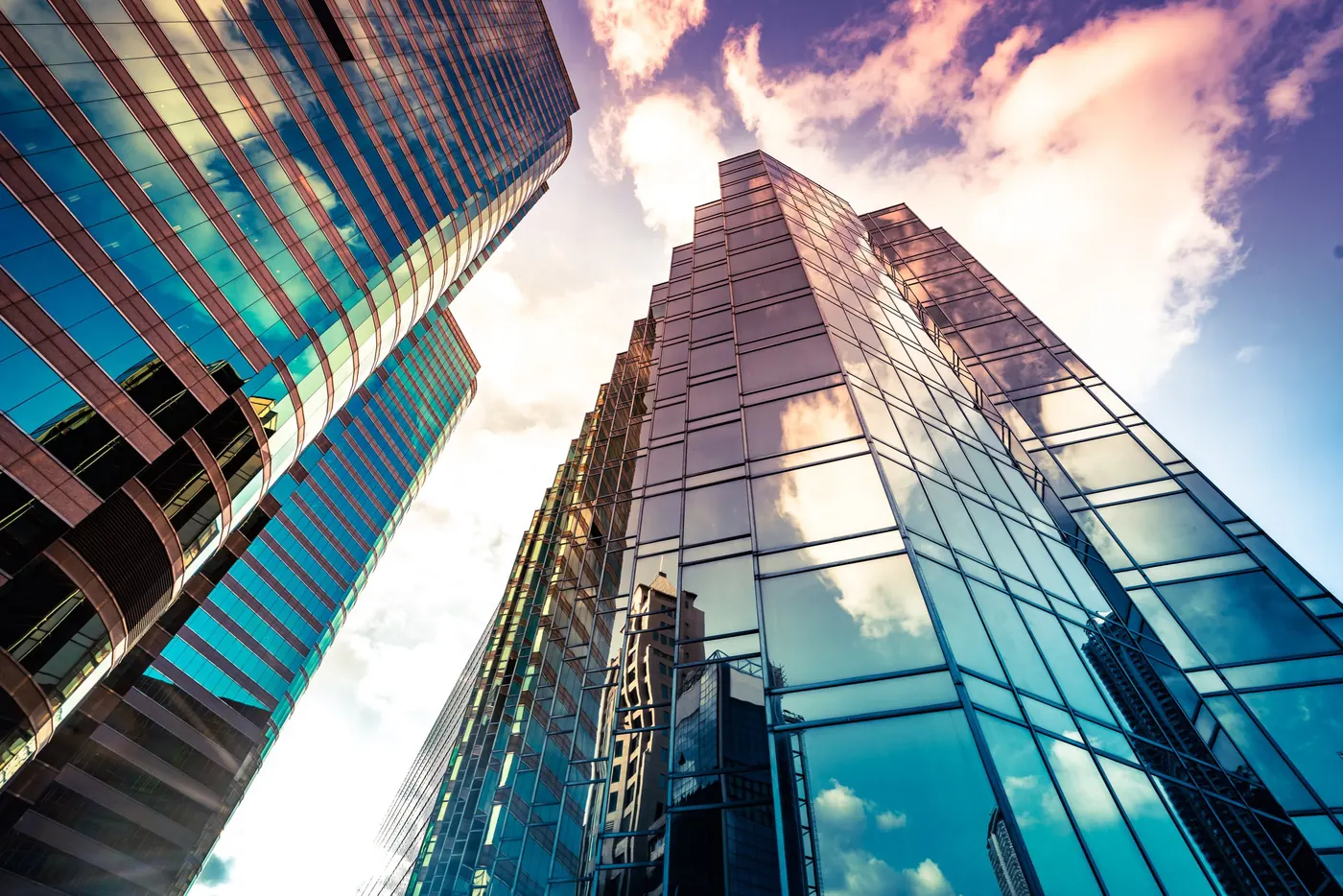
Towers, apartments, facades
High rise window and facade cleaning in Melbourne
High rise window cleaning in Melbourne means cleaning the outside glass and facade of a building too tall to reach from the ground, using rope access, an elevating work platform or the building's own maintenance unit. It is the height end of our commercial window cleaning service, for office towers, apartment buildings, hotels and hospitals.
Every job starts with the building's access: what is on the roof, whether it is certified and which method gets to every pane safely.
No work at height starts without current anchor certification and a site-specific SWMS
Access methods
Rope access, platform or BMU: which method suits your building
The building decides the method more than the cleaner does. Most towers are cleaned by rope access or a BMU; low and mid-rise buildings with open ground around them often suit a lift. This is how the three compare.
Rope access
Abseil window cleaning from roof anchors
- Reaches almost any height and shape of facade
- Needs certified anchors on the roof
- No heavy equipment on the footpath
- Small footprint below: a barricaded drop zone
- Wind limits the working days
- Technicians work in pairs or more, never alone
Elevating work platform
Boom lift or scissor lift from the ground
- Suits low and mid-rise buildings
- Needs firm, level ground and room to set up
- May need a council permit on a footpath or road
- Fast on long, flat elevations
- Operator needs the right high risk work licence
- Limited by the reach of the boom
Building maintenance unit
BMU, gondola or swing stage on the roof
- Built into many Melbourne towers
- Owned and maintained by the building
- Must be inspected and certified before use
- Operators need training on that unit
- Covers wide facades quickly
- Breakdowns stop the job until repaired
Scope
What a high rise clean includes
High rise office window cleaning covers the glass and the parts of the facade that hold dirt against it. Each item below is part of a standard drop; facade cleaning beyond the glass is quoted as an extra.
- External glassEvery pane on each drop washed and squeegeed or rinsed, top to bottom.
- Frames and mullionsAluminium frames and vertical mullions wiped so dirt does not run back onto the glass.
- Sills and ledgesBird droppings, leaves and dust cleared from ledges that drain onto the glass below.
- Spandrel and cladding panelsBuilding facade cleaning of panels between the glass, by quote and after a test area.
- Balconies and balustradesGlass balustrades on apartment towers, with notice to residents before each drop.
- Signage and awningsBuilding signs and entry awnings cleaned on the way down.
- Defect notesCracked panes, failed seals and loose sealant photographed and reported.
- Drop zone controlFootpath or forecourt below barricaded and signed while work is overhead.
- Photo recordBefore and after photos per elevation added to GS Connect.
Height safety
Anchor point certification and the owner's role
Rope access window cleaning hangs on the building's roof anchors, so the anchors have to be in date. Height safety standards in the AS/NZS 1891 series expect permanent anchors to be inspected by a competent person, generally at intervals of no more than 12 months, and an anchor without a current tag or certificate should not be used.
Keeping the anchors, static lines and any BMU inspected is the job of the building's owner or manager, not the cleaner. We ask for the certificate and the roof access plan before quoting the drop, and we will not start a job on anchors that are out of date.
- Anchor and static line certificate, with the inspection date
- Roof layout plan showing anchor positions
- BMU inspection record, where the building has one
- Roof access rules: keys, permits, escort
Older roof systems
Height safety standards have been revised since many older roof systems went in. If your anchors were installed many years ago, ask your height safety inspector whether they still meet the current standard.

The process
How a high rise window clean is planned and run
Most of the work happens before anyone goes over the edge. These steps cover the planning, the clean itself and the record you keep afterwards.
- 1
Roof and access survey
We inspect the roof, anchors or BMU, the elevations and the ground below, and count the drops needed for each face of the building.
- 2
Paperwork first
The anchor or BMU certificate is sighted, a safe work method statement is written for the building, and any footpath or road permit is applied for.
- 3
Notice and drop zones
Tenants and residents get notice of dates and times; the area below each drop is barricaded on the day.
- 4
Clean drop by drop
Each drop is cleaned top to bottom. Work stops when wind or rain makes it unsafe and resumes on the next suitable day.
- 5
Report and next date
Photos, defects found and the next scheduled clean are logged in GS Connect for the building manager.

Licences, tickets and insurance for work at height
Work at height in Victoria falls under the Occupational Health and Safety Act 2004 and the falls prevention rules explained by WorkSafe Victoria. These are the documents a building manager should see before a high rise clean.
| Item | Who holds it | Detail |
|---|---|---|
| Rope access tickets | The technicians | Available on request |
| EWP operation | The operator | High risk work licence for booms of 11 metres or longer |
| Anchor and BMU certification | Building owner | Current inspection certificate sighted before work |
| Safe work method statement | Golden Star | Written for each building and reviewed on site |
| Public liability insurance | Golden Star | Available on request |
Insurance certificates are kept on our accreditations, insurance and safety page and in GS Connect.
Price guide
High rise window cleaning prices
High rise cleaning is quoted per building after a roof survey, usually as a price per full clean. The number of drops, the method and how many days it takes set most of the cost.
| Item | From | What changes the price |
|---|---|---|
| Mid-rise building, rope access | On quote | Number of drops and storeys |
| Tower, rope access or BMU | On quote | Facade area, BMU condition and days on site |
| Low-rise elevation by boom lift | On quote | Hire of the lift, permits and ground conditions |
| Facade panel cleaning | On quote | Cladding type and staining |
High rise window cleaning across Melbourne
Most high rise work is in the CBD, Southbank, Docklands and St Kilda Road, where towers are packed close and footpath drop zones need council permits. Mid-rise offices and apartment blocks in Box Hill, Hawthorn and South Yarra are covered too. See our service areas.
High rise window and facade cleaning questions
Send the building address and number of storeys to info@goldenstar.au and we will arrange a roof survey.
How much does high rise window and facade cleaning cost in Melbourne?
Facade panels beyond the glass are priced separately.
How often should a high rise building have its windows cleaned?
Many towers clean external glass two to four times a year, with the entry levels done far more often from the ground. Buildings near main roads, rail lines or the bay usually need the shorter end of that range.
Are your high rise technicians police checked, insured and ticketed?
Every technician is inducted to the building's roof access rules and the safe work method statement before work starts.
Can high rise window cleaning be done after hours or on weekends?
Weekends suit many CBD buildings because footpaths are quieter and drop zones are easier to manage. Rope access at night is avoided, since the glass and the drop zone below cannot be seen properly.
Which parts of Melbourne do you cover for high rise work?
The CBD, Southbank, Docklands, St Kilda Road and suburban centres with multi-storey buildings across metropolitan Melbourne, plus selected regional Victorian sites by arrangement.
Arrange a roof and access survey
Tell us the address, the storeys and what is on the roof, if you know. We will check the anchors or BMU, plan the drops and send a price per clean.
