High-heat cooking
Asian kitchens with wok burners, grills, charcoal and kebab shops, and anything with several fryers. These ducts load fastest and often need cleaning several times a year.
Commercial and strata facilities management, Melbourne
Office Mon to Fri, 9:00 am to 5:00 pm info@goldenstar.au
Grease, fire risk, AS 1851
Canopy cleaning in Melbourne covers the whole kitchen exhaust path: the hood over your cooking line, its grease filters, the ductwork running to the roof and the exhaust fan at the end. Golden Star arranges it alongside our kitchen deep cleaning, so the parts you can see and the parts you cannot are cleaned to one schedule.
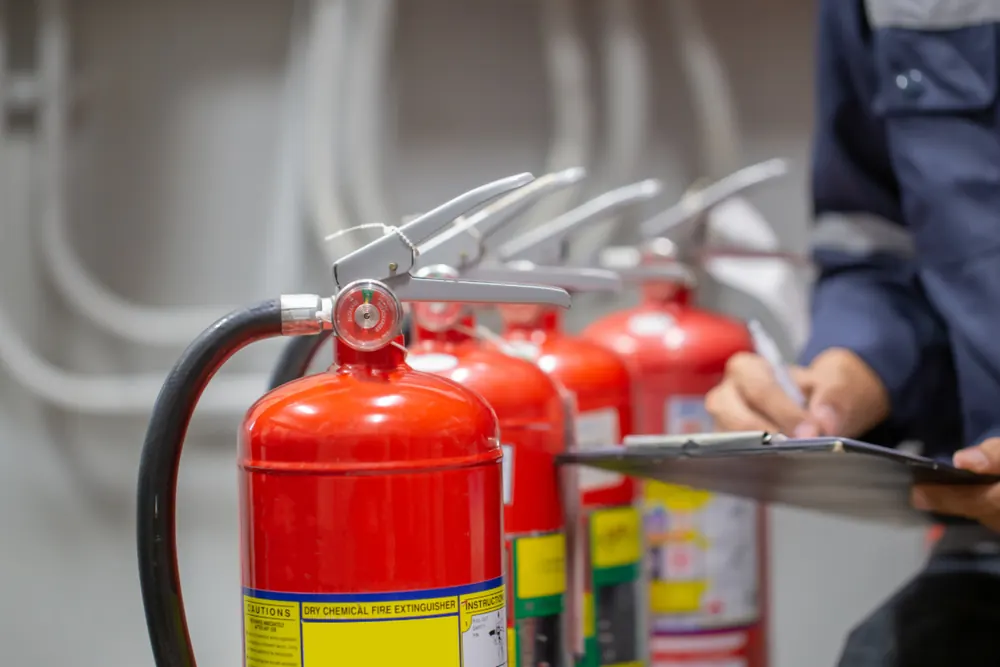
Grease inside a duct is fuel. A flare-up on the line can be drawn straight into it, which is why exhaust systems sit inside fire maintenance rules.
Exhaust work is booked to AS 1851 and your building's maintenance schedule
The risk
Kitchen exhaust cleaning removes the grease that collects where you cannot see it. Filters catch some of it; the rest condenses on duct walls, bends and the fan housing, and keeps building up every service.
Ducts usually pass through ceiling spaces and other floors on their way to the roof. A fire that gets into one can travel to parts of the building far from the kitchen, which is why a dirty duct worries a building manager as much as the chef.
Check your policy
Read the fire and kitchen conditions in your insurance policy before you set a cleaning interval. If the policy asks for quarterly cleaning, that is the figure to plan around.
Scope
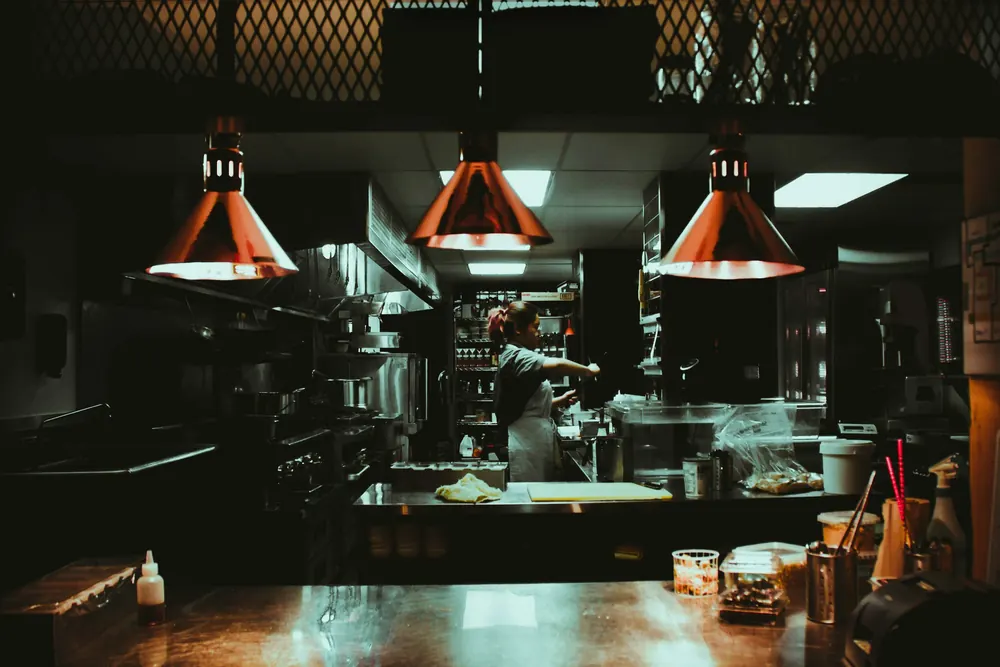
A full exhaust clean runs from the filters to the roof fan. Each tab is one stage, and the report records every stage so you can see what was reached and what could not be.
Ducts are cleaned through access panels. Where a section has no panel, we say so on the report rather than mark it clean.
Who it is for
Any kitchen with a canopy needs its exhaust cleaned, but how quickly it gets dirty depends on what is cooked and for how long. Commercial canopy cleaning is booked most by these four groups.
Asian kitchens with wok burners, grills, charcoal and kebab shops, and anything with several fryers. These ducts load fastest and often need cleaning several times a year.
Long trading days across breakfast, lunch, dinner and events. Work is booked on the quietest night and may be split across two visits.
Mixed-use buildings where the duct rises past homes. The owners corporation often asks tenants for cleaning records as a lease condition.
Cooking every day of the year with lower grease loads. Cleaning is set by the facility's maintenance schedule and booked around meal times.
The process
Commercial kitchen exhaust cleaning happens when the kitchen is closed, usually overnight. These are the steps from first inspection to the report on your desk.
We look at the canopy, count filters, find the access panels and trace the duct to the fan.
The cleaning interval is set from your cooking type and hours, your insurance conditions and the building's maintenance schedule.
The line is covered, filters soaked, the hood degreased and the duct and fan cleaned from the access points.
You receive dated photos of each stage, a list of anything not reachable and the next due date, stored in GS Connect.
AS 1851 covers the routine service of fire protection systems, and kitchen exhaust sits within it. The interval for your kitchen comes from the standard, your insurer and your building's maintenance schedule, whichever asks for most.
| Item | Detail |
|---|---|
| Standard | AS 1851, routine service of fire protection systems and equipment |
| Building records | Where the building's owner lists the kitchen exhaust among its essential safety measures, our records feed the annual essential safety measures report; see the Building and Plumbing Commission (formerly the Victorian Building Authority) |
Our certificates of currency are listed on the insurance and safety page. For other fire equipment see fire safety services.
Price guide
Exhaust cleaning is quoted after an inspection, because the price depends on the length of duct, the number of bends and how the fan is reached. These are the usual parts of a quote.
| Item | From | What changes the price |
|---|---|---|
| Canopy and filters only | On quote | Canopy length and number of filters |
| Full system: hood, duct and fan | On quote | Duct length, bends, floors passed through and roof access |
| Filter exchange or filter-only visit | On quote | How often filters are swapped between full cleans |
| Fitting extra access panels | On quote | Ducts that cannot be reached without them |
Grease pit cleaning, meaning the pump-out of the grease trap under the kitchen, is a liquid waste job handled by a carrier with the right EPA Victoria permissions and is not part of an exhaust clean.
Canopy and exhaust cleaning is booked for kitchens across metropolitan Melbourne, from city restaurants under apartment towers to food factories and production kitchens in Truganina, Laverton and Dandenong. See Melbourne areas we service.
For an inspection of your exhaust system, email info@goldenstar.au with the address and cooking type.
A canopy and filter clean costs much less than a full system clean, which adds duct length, bends and roof access to the job. We inspect first and give a fixed price per clean.
It depends on how hard the kitchen works. Heavy wok, grill and fryer kitchens need cleaning several times a year, light-use kitchens less often, and your insurer or building may set a minimum.
Hood and filter work is done by Golden Star kitchen crews.
It has to be. The canopy is cleaned with the line cold and covered, so the work is booked after the last service and finished before the next prep shift.
Across metropolitan Melbourne, including the CBD, inner suburbs and the industrial west and south-east, plus selected regional Victorian kitchens on request.
Tell us what you cook, how many hours the kitchen runs and when the duct was last cleaned. We will inspect the system and quote a cleaning interval and price.