Retail and showrooms
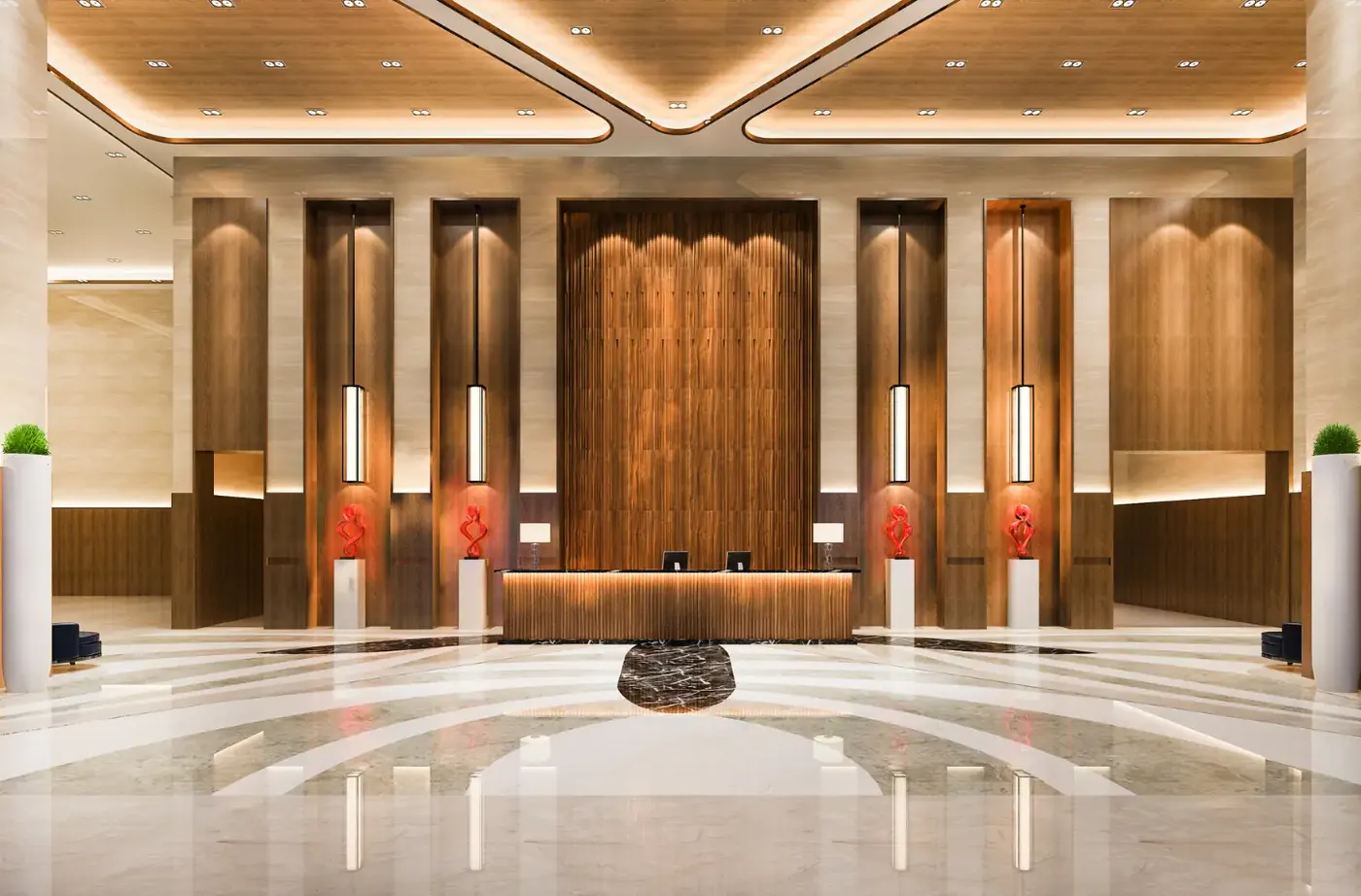
Fashion and homewares stores where timber wears in front of counters and fitting rooms. Recoats are timed for after close.
Commercial and strata facilities management, Melbourne
Office Mon to Fri, 9:00 am to 5:00 pm info@goldenstar.au

Think Floor, timber
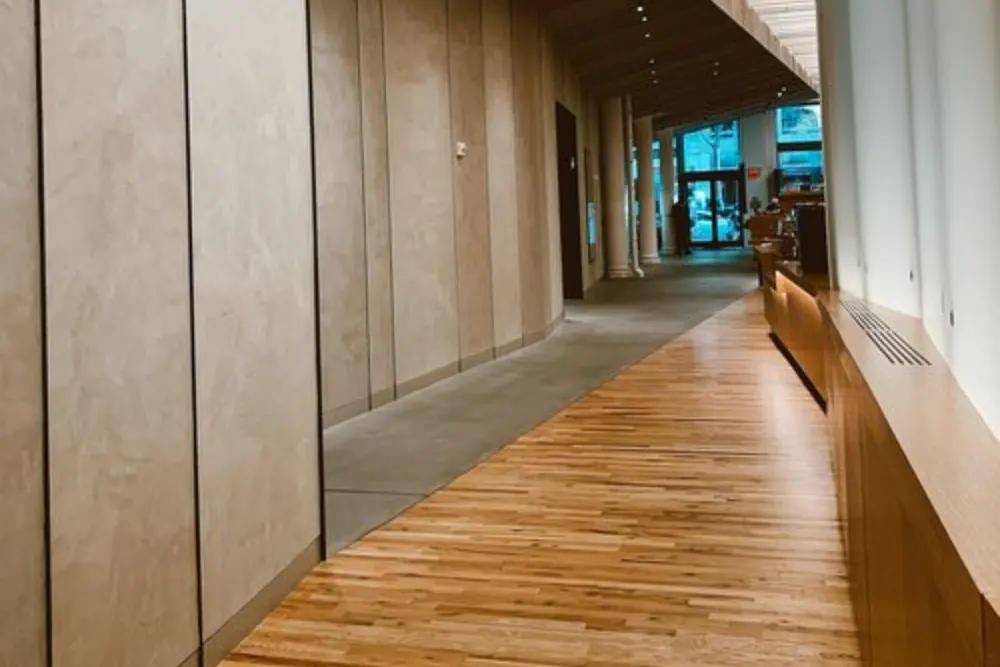
Commercial timber flooring work covers sanding, polishing, repairs and installation of solid and engineered timber floors in shops, restaurants, hotels, offices and halls. Golden Star handles it through Think Floor, our commercial flooring division, with a finish chosen for how hard the floor works and how soon the venue has to reopen.
Sanding and coating are usually done overnight or across a closed weekend, with water-based finishes where low odour matters.
Sanding and coating by Golden Star's flooring staff
Sand and polish
A commercial timber floor is sanded back to bare wood when the finish has worn through in the traffic lanes, the boards have greyed or stained, or deep scratches have reached the timber. Floor sanding and polishing in Melbourne venues normally means several passes with a drum sander, edging along the walls, filling of gaps and nail holes, then the coats.
If the finish is only dull or lightly scuffed, a buff and recoat brings it back in one night without taking the floor down to bare timber.
Low-odour option
Water-based finishes smell far less than solvent products, so restaurants and occupied offices can often allow light foot traffic within a day.
Repairs
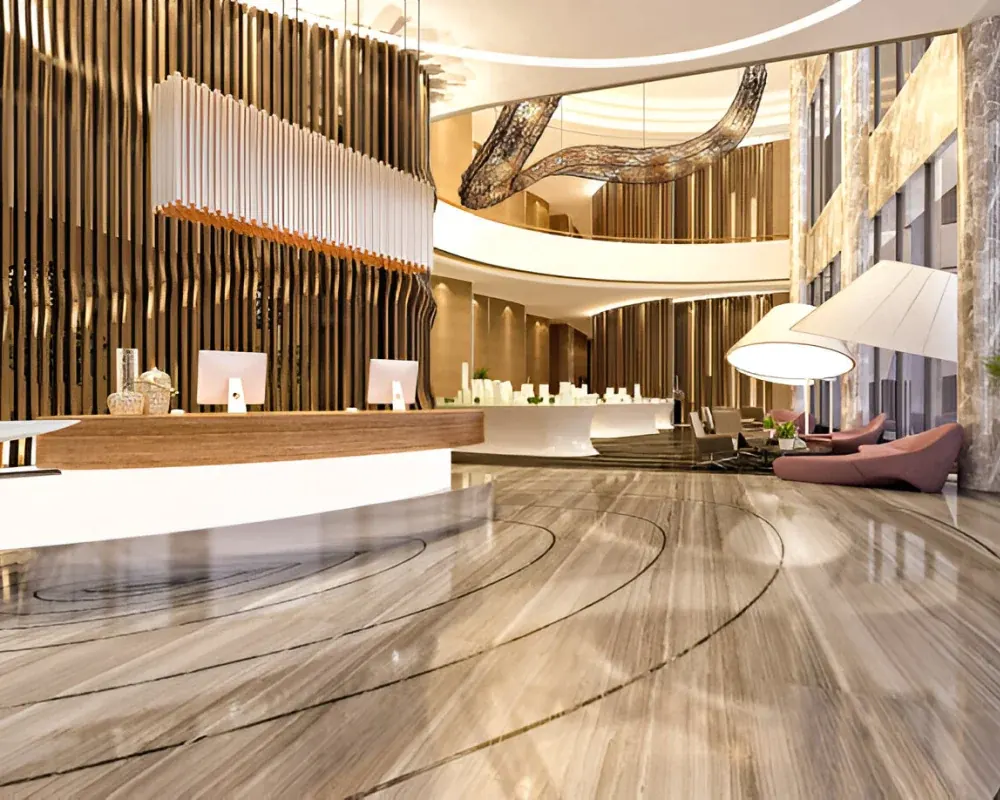
Most damage to a commercial timber floor comes from water, furniture or the building's humidity. The tabs show what we check and do for each problem, and many timber floor repairs in Melbourne venues are finished in a single night.
When boards rise at the edges, there is usually moisture coming from below or a leak nearby.
Sanding a cupped floor before it has dried leaves it crowned later, so the moisture is dealt with first.
Gaps open in winter when heating dries the air, and many close again in the damper months.
Chairs and grit do most of the damage on hospitality and retail floors.
A burst pipe, leaking dishwasher or flooded entry can stain and swell boards within hours.
Finishes
The finish decides how the floor looks, how long it lasts and how quickly you can reopen. Each option involves a trade-off, and we talk it through at the inspection.
Most common in occupied buildings
Traditional high-build finish
Matte, natural look
Process
Sanding is loud and dusty, so the plan is built around when your venue can be empty. A site supervisor is your single contact from inspection to handback.
We take moisture readings, identify the species, and check whether the boards are solid or engineered. On engineered timber we measure the wear layer, because it limits how many times the floor can be sanded.
You choose the finish and the dates. We book access, protect walls and fittings, and plan the work so exits stay usable.
Drum and edge sanding with extraction, then gaps and holes filled and the floor vacuumed and wiped clean of dust.
Coats go on with drying time between each. Signs stay up, and we tell you when light traffic, furniture and rugs can come back.
You receive a short report and care notes for your cleaners: what to mop with, what to avoid, and when to book the next recoat.

Who it is for
Timber goes into buildings where looks matter as much as wear. These are the venues that book timber work most, and what each one needs from the floor.
Fashion and homewares stores where timber wears in front of counters and fitting rooms. Recoats are timed for after close.
Dining floors that take chair scrapes and spills every night. Water-based finishes let the room reopen quickly.
Lobbies, ballrooms and dance floors, sanded or recoated between bookings.
School halls, dance studios and multi-purpose floors that need grip as well as gloss.
Engineered timber in reception areas and boardrooms, more often recoated than sanded.
Original solid boards in older commercial buildings, repaired with matching timber and sanded lightly to keep their character.
Timber moves with moisture and sanding makes fine dust, so these checks sit behind every job. Insurance certificates are on our accreditations and safety page.
| Item | Detail |
|---|---|
| Moisture | Readings taken before installing or sanding and compared with the manufacturer's range for the product |
| Engineered boards | Wear layer measured so we know how many sands the floor can take |
| Wood dust | Sanders run with dust extraction, since wood dust has a workplace exposure standard set by Safe Work Australia |
| Slip resistance | Finish grade and sheen chosen for the use; existing floors can be tested on site to AS 4663 |
| Products | Safety data sheets for every finish kept on site and in GS Connect |
Price guide
Sanding and polishing is priced per square metre, installation on the timber chosen plus labour, and repairs per job. We give a fixed price after an inspection, because the condition of the boards drives the labour.
| Item | From | What changes the price |
|---|---|---|
| Sand and polish | On quote | Species, gaps to fill, stain, finish chosen |
| Buff and recoat | On quote | How worn the existing finish is |
| Board repairs | On quote | Whether matching timber can be found |
| Supply and install engineered timber | On quote | Product, subfloor preparation, underlay |
| Supply and install solid timber | On quote | Species, board width, fixing method |
| Night or weekend work | On quote | Venues that must reopen by morning |
Our flooring crews sand, repair and install timber across metropolitan Melbourne, plus selected regional Victorian sites when we have capacity. Hospitality strips in Richmond, South Yarra and the CBD are usually done between closing time and the next lunch service. Find your suburb on our service areas page.
Not covered here? Ring 1300 38 38 62, or email photos of your floor to info@goldenstar.au.
Sanding and polishing is priced per square metre and installation by the product chosen. We inspect first, because gaps, repairs and the wear layer on engineered boards all change the labour.
Busy retail and hospitality floors usually need a recoat well before they need a full sand. Booking a buff and recoat when the traffic lanes first look dull keeps the timber from wearing through.
Timber work is done by Golden Star's own flooring staff, inducted to the venue's safety rules before they start.
Yes. Because sanding is loud, most commercial jobs run overnight or over a closed weekend. Water-based finishes help venues reopen sooner, and we confirm the times for the chosen product before booking.
The CBD and inner suburbs, bayside, the east and the south-east, plus selected regional Victorian venues when a crew can be spared for the trip.
Send photos of the floor and tell us how long the venue can close. We will inspect, take moisture readings and quote a fixed price.