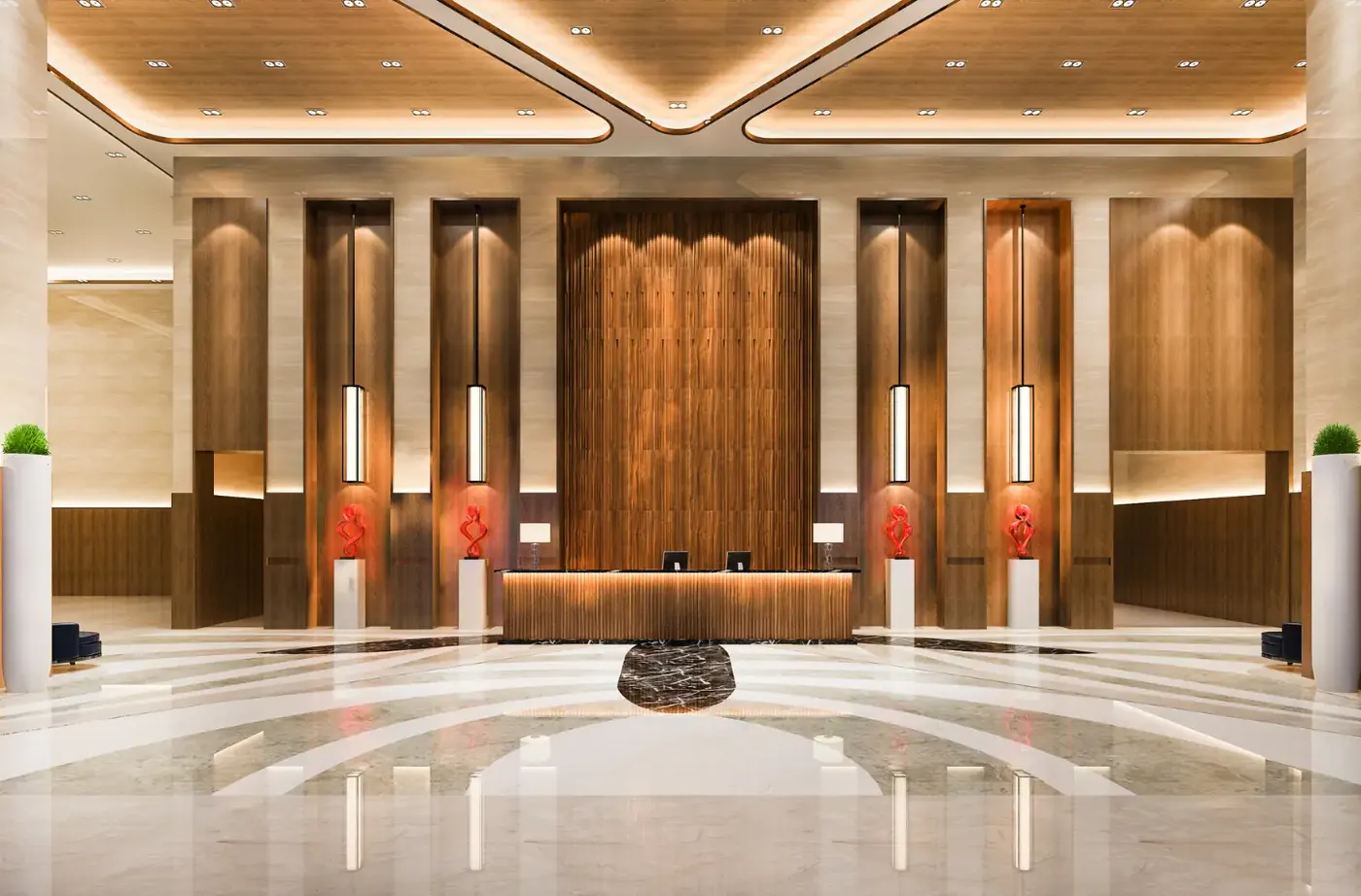
Restaurants and cafes
Cleaned after the last service and finished before the morning prep team arrives. Smaller venues often combine this with nightly restaurant and cafe cleaning.
Commercial and strata facilities management, Melbourne
Office Mon to Fri, 9:00 am to 5:00 pm info@goldenstar.au
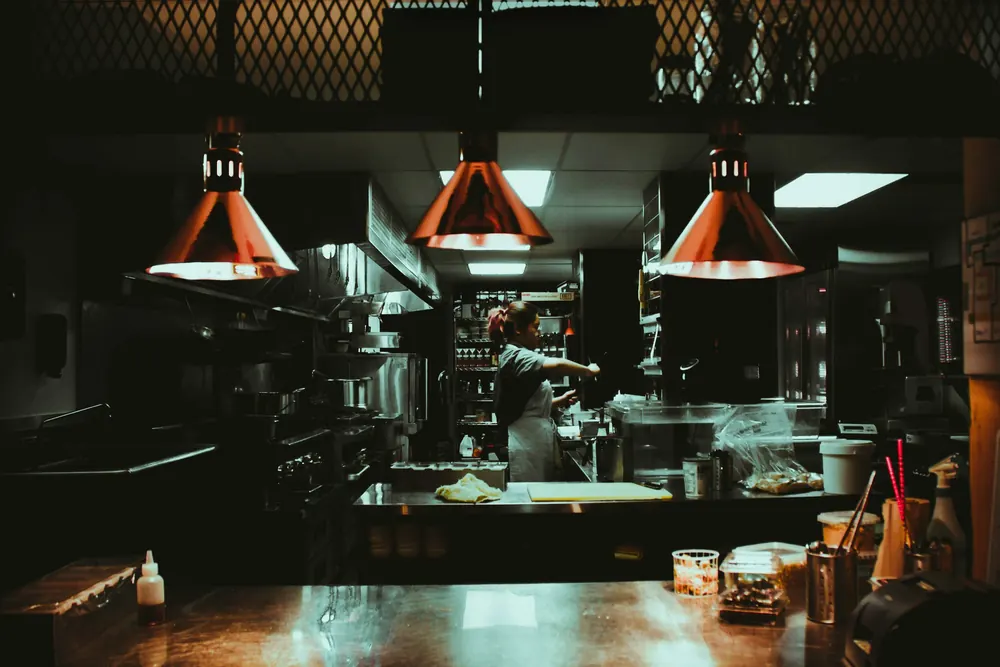
Kitchens, back of house
Commercial kitchen cleaning is the degreasing and sanitising of a food business's cooking line, benches, equipment, walls, floors, coolrooms and canopy hoods, done after service so the kitchen opens clean. It sits within Golden Star's commercial cleaning services and is carried out by our own crews for restaurants, hotels, aged care homes and staff canteens.
Most kitchens book a deep clean every few months on top of their own daily close-down. We quote from a walk-through with your head chef or kitchen manager.
Kitchen crews are Golden Star employees, supervised on site
Scope
A deep clean takes the kitchen back to bare stainless, from the canopy down to the floor drains. The tabs split the work the way the crew does it on the night, starting high and finishing on the floor so grease that drips is cleaned last.
This is where most of the grease sits, so it takes the longest. Equipment is pulled out wherever it is on wheels or flexible connections.
Gas equipment is only moved where it is on a flexible hose with a restraint chain. Anything hard-plumbed stays put and we clean around it.
The visible part of the exhaust system is cleaned as part of every deep clean. Ducts and fans are a separate job.
For duct and fan cleaning see kitchen canopy and exhaust cleaning, which covers the parts behind the filters.
Food-contact surfaces are washed, rinsed and sanitised, then left to air dry before your staff restock them.
A greasy kitchen floor is a slip hazard before it is a hygiene problem, so floors get a machine scrub rather than a mop.
Degreasers strong enough for a fryer can taint food if they are left on a bench, so each product is matched to the surface it is used on.
Who it is for
Every kitchen gets the same deep clean sequence, but the timing and the risks change with the business. These are the kitchens that book commercial kitchen cleaning services from Golden Star, and what usually matters most to each.
Cleaned after the last service and finished before the morning prep team arrives. Smaller venues often combine this with nightly restaurant and cafe cleaning.
Banquet, room service and breakfast kitchens rarely close, so the work is split into sections across several nights.
Cooking for vulnerable people, so the site's infection control rules and food safety program set the method and the records.
Corporate and factory canteens with a weekday menu. Deep cleans fit neatly into a weekend or a shutdown week.
Canteens and teaching kitchens cleaned in the holidays, when equipment can be stripped down without anyone needing it.
Large prep kitchens with long shifts. Industrial kitchen cleaning here is planned around the production roster and can run in zones.
The sequence
Cleaning a commercial kitchen well comes down to order: high to low, dirty to clean, and nothing goes back on a bench until the bench is sanitised. This is the sequence our crews follow, with a supervisor checking each stage.
Before the first visit we walk the kitchen with your head chef or manager, note what moves, what must not be touched, and where the isolation switches are.
Equipment is turned off and left to cool. Food, utensils and small wares are covered or moved out of the splash zone.
Filters come out to soak, then the hood, upper walls and lights are degreased so anything that drips lands on surfaces not yet cleaned.
The line is degreased, benches are washed and sanitised, then the floor is machine scrubbed and the drains cleaned.
The supervisor checks the kitchen against the scope, takes photos and posts the report in GS Connect before your morning shift arrives.

The kitchen's owner holds the food business registration and the food safety program; our cleaning supports them with records. Details of our cover are on the accreditations, insurance and safety page.
| Item | How it applies to your kitchen |
|---|---|
| Food Act 1984 (Vic) | Your council registers the premises. Class 1 and class 2 premises keep a food safety program, and our cleaning records can sit inside it. |
| Food Standards Code | Premises and equipment must be kept clean. Guidance is published by Food Standards Australia New Zealand. |
| AS 1851 | The fire equipment servicing standard, which takes in kitchen exhaust. Duct and fan work is booked as its own job, apart from the deep clean. |
| Chemical records | Safety data sheets for every product used on site, stored in GS Connect |
Price guide
Kitchen deep cleans are quoted per visit after a walk-through, because a ten-burner line with two combi ovens and a coolroom takes far longer than a cafe with a flat grill. These are the parts of a quote and what pushes each one up or down.
| Item | From | What changes the price |
|---|---|---|
| Small kitchen deep clean | On quote | Cafe or canteen with one cooking line and no coolroom |
| Full restaurant or hotel kitchen | On quote | Number of appliances, canopy length, coolrooms and dry stores |
| Canopy filters only | On quote | Number of filters and how heavily they are loaded |
| Regular contract visits | On quote | Monthly or quarterly deep cleans priced together |
Grease traps are pumped out by a liquid waste contractor under your council's trade waste rules, not by a cleaning crew; we can tell you when the pit looks full but we do not pump it. Gas and refrigeration faults go to licensed trades, and rodents or cockroaches found during a clean are reported for commercial pest control.
If you need extra hands on the dish station every service rather than a periodic clean, that is kitchen stewarding, which our hospitality division supplies.
Golden Star cleans kitchens across metropolitan Melbourne. The densest run of restaurant and hotel kitchens is in the CBD, Southbank and Richmond, and the larger canteens and production kitchens sit in the south-east and western industrial suburbs. The full list is on the areas we service.
Ask the hospitality and cleaning team at info@goldenstar.au, or ring 1300 38 38 62 in office hours.
Each deep clean is quoted after a walk-through, based on the number of appliances, the length of the canopy, coolrooms and how long since the last clean. Booking regular visits usually costs less per visit than a one-off clean of a kitchen that has been left for a year.
Your staff clean daily at close; a professional deep clean sits on top of that. Busy restaurant and hotel kitchens often book monthly or quarterly, while a cafe with light cooking may only need it two or three times a year. Canopy filters load up faster than anything else and are usually done more often.
Crews are Golden Star employees who are inducted to your kitchen's rules on the walk-through before the first visit, including no-go areas and isolation points. Their supervisor is the same person each visit wherever the roster allows.
That is the normal arrangement. Most deep cleans start after the last sitting and finish before the breakfast or prep shift, and kitchens that trade every day can be cleaned in sections over several nights.
Metropolitan Melbourne, from city restaurants and hotels to canteens in Dandenong, Clayton and Truganina, plus selected regional Victorian sites when crews are available.
Tell us what kind of kitchen it is, how many hours it trades and when it last had a deep clean. We will arrange a walk-through with your chef and send a fixed price.