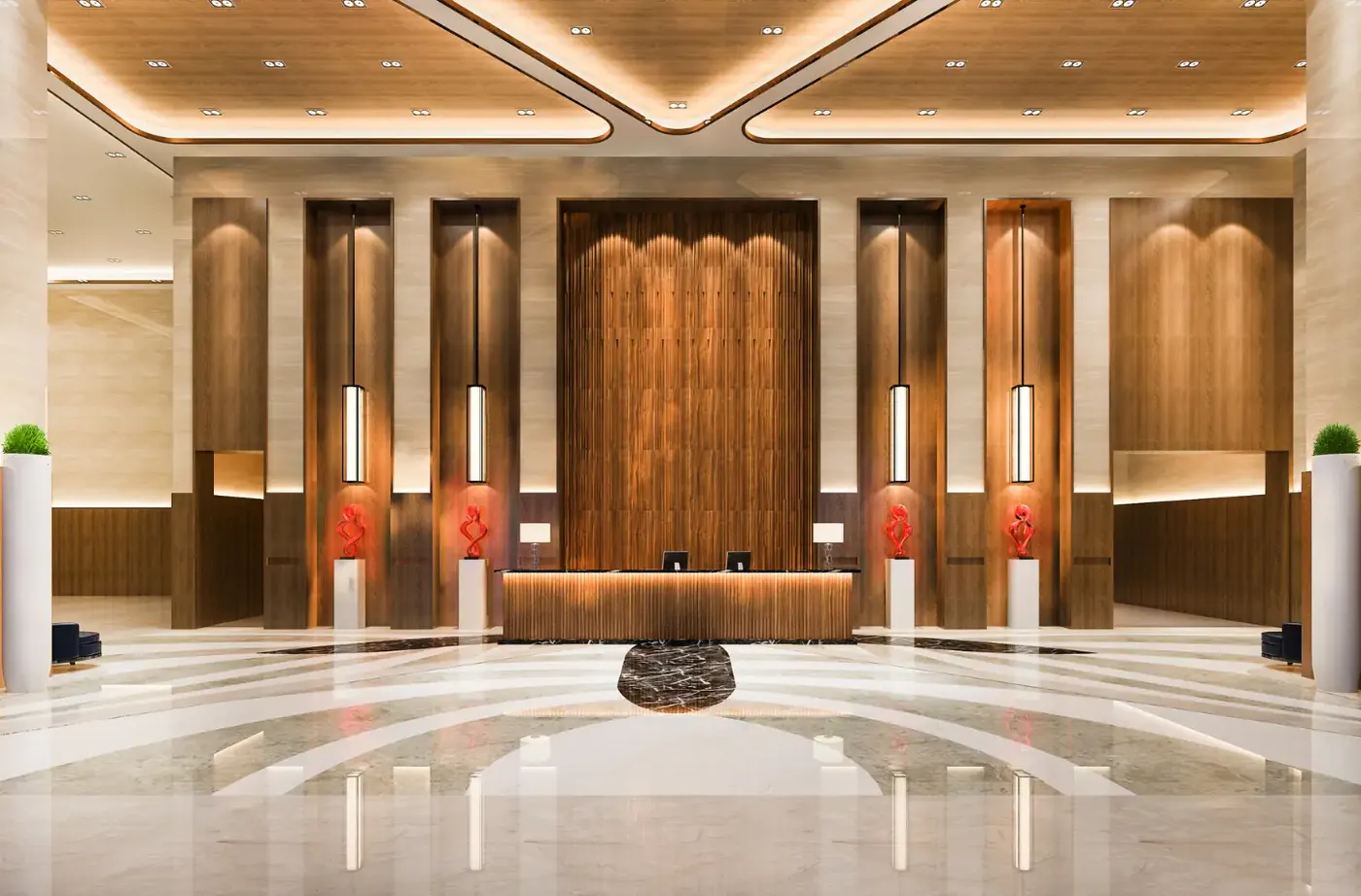
Offices
Tea rooms and food left in desks draw cockroaches and ants. Indoor baiting plus rodent stations at the dock covers most office floors.
Commercial and strata facilities management, Melbourne
Office Mon to Fri, 9:00 am to 5:00 pm info@goldenstar.au

Licensed pest technicians
Commercial pest control in Melbourne is a scheduled cycle of inspection, baiting, monitoring and treatment for business premises, carried out by licensed pest technicians and written up after every visit. Golden Star arranges it for offices, warehouses, schools and strata buildings as part of its facilities management services, so pest visits run on the same calendar as your cleaning and maintenance.
We book the technicians, brief them on your site rules and read each service report before it reaches you.
Treatments by licensed pest technicians engaged by Golden Star
Scope by pest
Each service covers inspection, treatment where activity is found, monitoring devices and a written record. Methods differ by pest, because a cockroach problem behind a dishwasher is handled very differently from rats along a loading dock.
German cockroaches are the main indoor pest in Melbourne businesses. They breed in warm hidden spots such as fridge motors, dishwasher housings, sink cabinets and wall cavities.
A one-off spray through an office rarely fixes German cockroaches. Bait, monitors and removing their hiding spots are what bring the count down.
Rodents follow food waste and gaps in the building. Roof rats and house mice are the usual commercial pests here, and activity tends to pick up as the weather cools in autumn.
Ant trails into tea rooms peak in the warm months, while spiders build up on eaves, awnings and car park ceilings.
Termite work starts with an inspection, then a management plan if activity or risk is found. The AS 3660 series is the Australian standard for termite management, and part 2 deals with existing buildings.
Pigeons on ledges and flies near food are a hygiene problem first. Droppings make entries slippery and stain facades.
Who it is for
Any workplace that stores food, waste or stock can draw pests. Each building type below has a different risk and a different set of records the owner needs to keep.
Kitchens, cafes and food courts need frequent visits, a pest log and records a council officer can follow.
Pest control for restaurants and cafesBin rooms, car parks and common areas serviced for the owners corporation, with reports the committee can read.
Strata and body corporate pest controlTea rooms and food left in desks draw cockroaches and ants. Indoor baiting plus rodent stations at the dock covers most office floors.
Rodents chase spilled product and pallets. Stations run along walls and beside roller doors, and stored product insects are checked where food or grain is held.
Treatments are booked for holidays or after hours, with products chosen for rooms that children use, and records kept for the centre's files.
Low-odour methods near patients and residents, and records an infection control team can check.
Schedule and reporting
Your contract names a site supervisor, an operations lead and a contract contact at Golden Star, which means a pest report never stays with the technician alone. This is how a typical contract moves from first walk-through to routine visits.
A licensed technician walks the site with you, finds where pests are active and why, and marks where devices should sit.
You get a plan listing the pests covered, device numbers and positions, visit frequency, products and the price per visit.
Each visit is booked around trading. The technician signs in, checks every station and monitor, treats where needed and logs each finding.
The report is filed in GS Connect. Your site supervisor reads it and raises any building fix it calls for, such as a door seal or a dripping tap.
Activity trends are reviewed with you, and visits move up or down to match what the monitors show.

In Victoria, people who use pesticides for commercial pest work need a pest control licence issued by the Victorian Department of Health. These are the rules and records that sit behind each visit; insurance certificates are on our accreditations and insurance page.
| Item | Detail |
|---|---|
| Pest control licence | Held by each technician on your site |
| Termite work | AS 3660 series, with part 2 covering termite management in existing buildings |
| Workplace safety | Occupational Health and Safety Act 2004 (Vic). Product data sheets are available to you, and ours are on the safety data sheets page |
| Food premises | Food Act 1984 (Vic) and the pest rules in the Food Standards Code |
| Records kept | Service report, device map and products applied, stored in GS Connect |
Price guide
Business pest control is priced per visit or as a yearly contract, and the figure depends on floor area, the number of devices and how often a technician attends. We quote after the first inspection so the price matches what is actually on site.
| Item | From | What changes the price |
|---|---|---|
| First inspection and plan | On quote | Site size and the number of buildings |
| Scheduled service visit | On quote | How many stations and monitors are checked |
| Cockroach clean-out | On quote | How heavy the infestation is and how many rooms are affected |
| Termite inspection | On quote | Building size and access to roof space and subfloor |
| Visit outside trading hours | On quote | Sites that cannot have a technician in while open |
If pests keep returning after several visits, the cause is usually in the building: a cracked drain, a gap under a roller door, or stock and food stored on the floor. Treating more often will not close those gaps. Your site supervisor lists the repairs, and Golden Star can book them.
Homes and rental properties are outside Golden Star's work. Domestic jobs belong to our sister brand Magic Touch. Termite barriers for new construction are builder work and we do not arrange them.
Golden Star arranges commercial pest control across metropolitan Melbourne, from CBD towers to the warehouse belts in the west and south-east, and at selected regional Victorian sites when there is capacity. See the full list of Melbourne areas we cover.
For a question about a particular building, ring 1300 38 38 62 and ask for our business development manager.
It depends on the size of the site, how many bait stations and monitors are installed, and whether visits are monthly or quarterly. A technician inspects first, and you receive a written plan with a fixed price per visit before anything is treated.
Kitchens and food storage areas usually need monthly visits. Offices and warehouses without food handling are often serviced every second month or quarterly. Termite inspections are a separate interval set in the inspection report.
Technicians are licensed in Victoria and engaged by Golden Star, and they are inducted to your site rules before their first visit. Their licence details are kept on file and you can ask for copies.
Yes. Restaurants, shops and offices often book early mornings, evenings or weekends so nobody is in the room during treatment. A loading may apply outside business hours.
Baits sit inside locked stations or in cracks out of reach, and sprays are kept to the areas that need them. The technician tells you if a room must stay empty for a time, and the data sheet for every product is available on request.
All of metropolitan Melbourne, including the CBD, the western industrial suburbs, Dandenong, Frankston and the northern suburbs, plus some regional Victorian sites when there is capacity.
Tell us the address, what you have seen and where. A licensed technician inspects first, and you get a written plan and price before any treatment starts.