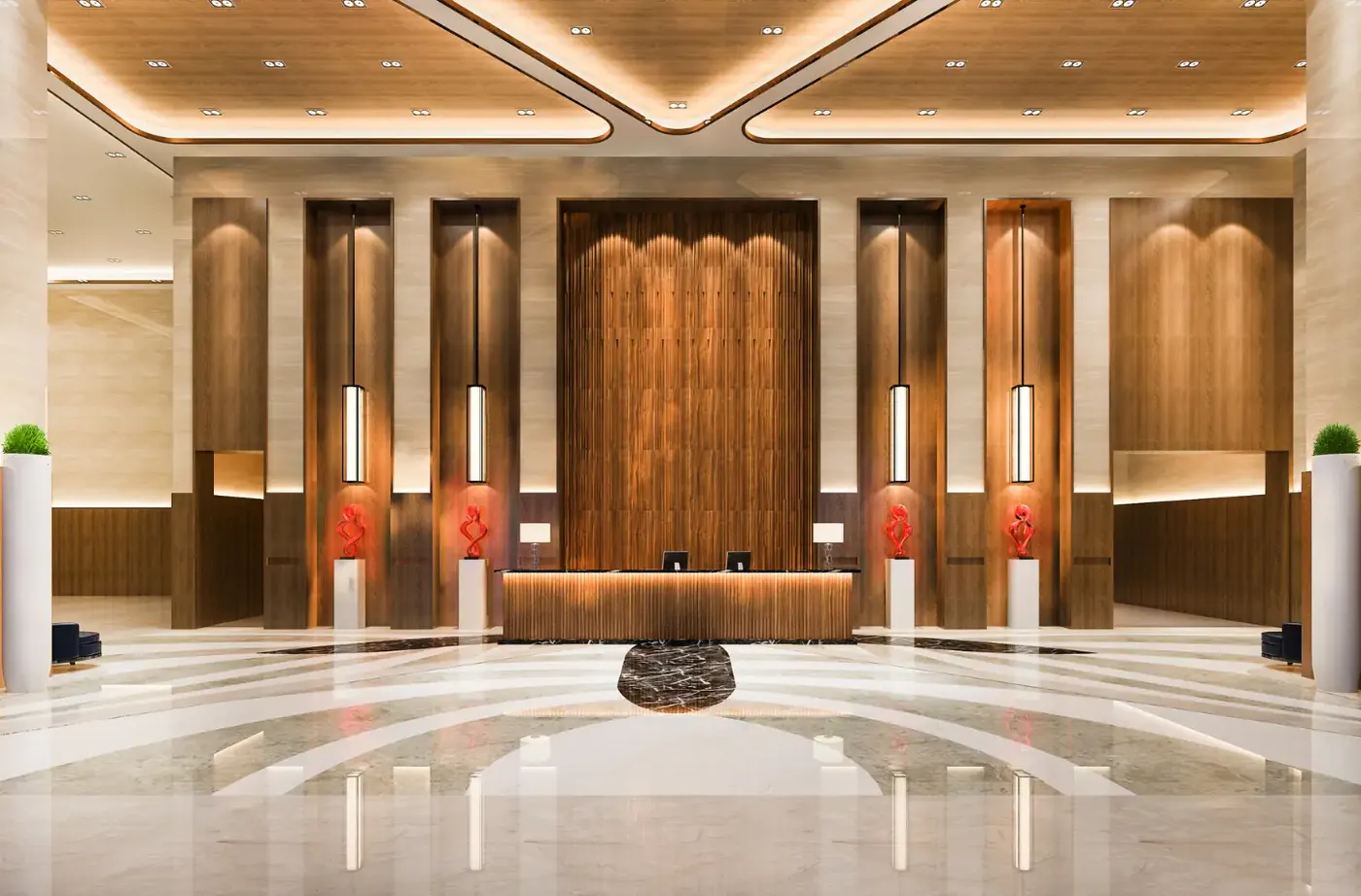
Retail and showrooms
Hard-wearing under trolleys and display moves. Entries need attention on wet days, because the polish can be slippery with water on it.
Commercial and strata facilities management, Melbourne
Office Mon to Fri, 9:00 am to 5:00 pm info@goldenstar.au

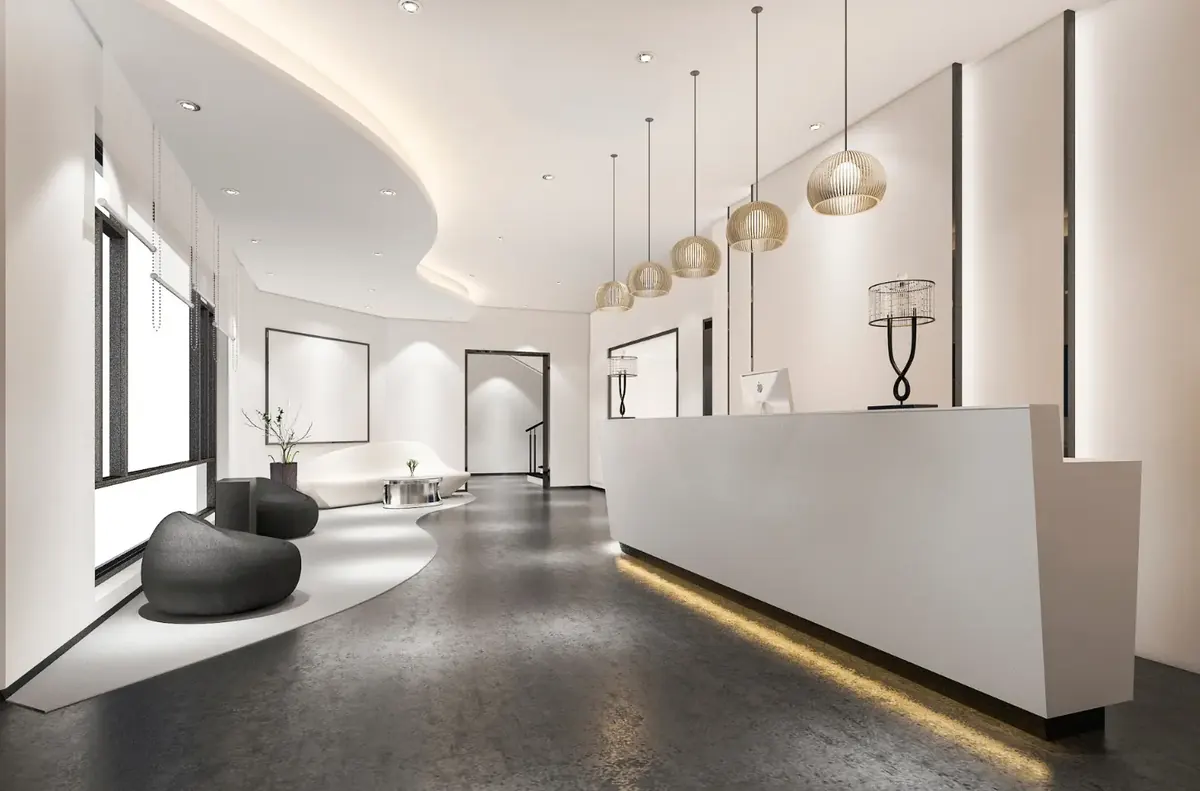
Think Floor, concrete floors
Commercial polished concrete is an existing or new slab ground with diamond tooling, hardened with a densifier and honed to the sheen you choose, so the concrete itself becomes the finished floor. It sits alongside resin coatings in our concrete and epoxy floor services, and the same grinding work also strips old coatings and glue before a new floor goes down.
Every slab polishes differently, so a trial area comes before a full quote whenever the slab has patches, cracks or an unknown history.
Finishes
Two choices set the look: how deep the grind goes, which decides how much stone shows, and how far the honing goes, which decides the sheen. A third choice, mechanical polish or grind and seal, decides the upkeep.
Only the top paste layer of the slab is honed, so little or no stone shows.
A slightly deeper grind opens up the fine sand and the tips of small stones.
The slab is ground a few millimetres down to show the larger stones in the mix.
These are often sold under the same name but behave very differently over time.
Who it is for
Polished concrete suits large floors that take heavy wear and need simple upkeep. These are the buildings that ask for it most, and what to watch for in each.
Hard-wearing under trolleys and display moves. Entries need attention on wet days, because the polish can be slippery with water on it.
Exposed slabs in breakout areas and reception. Rolling chairs and coffee spills are the main wear.
Industrial polished concrete reduces slab dusting and is easier to scrub than raw concrete.
Bars and cafes like the look, but oil, wine and acidic drinks can mark an unsealed polish.
Corridors and halls with high foot traffic and tight cleaning budgets.
Ground floor lobbies and car park entries in residential and mixed-use buildings.
How it runs
A polished floor goes through several passes with finer tooling each time. The number of passes is what sets the price and the time the floor is closed.
Hardness, cracks, patches, old coatings, glue and the joints are checked, and a trial patch is ground if the slab is unknown.
Metal-bond diamonds take off coatings, high spots and the top layer to the exposure you chose.
Cracks and holes are filled, then a densifier hardens the surface so it takes a polish.
Resin-bond diamonds work through finer grits to the matt, satin or gloss finish you picked.
A penetrating guard is applied for stain resistance, then wet slip resistance is tested before handover.
Upkeep
A polished concrete floor is kept up by cleaning, not by recoating. Grit is what dulls it, so dust mopping and scrubbing with a neutral pH cleaner do most of the work, and a high-speed burnish brings the sheen back between full re-hones.
Our commercial floor cleaning team can take on the scrubbing and burnishing schedule once the floor is handed over.
Worn lanes
Traffic lanes at doors and checkouts usually dull first. They can be re-honed without regrinding the whole floor.
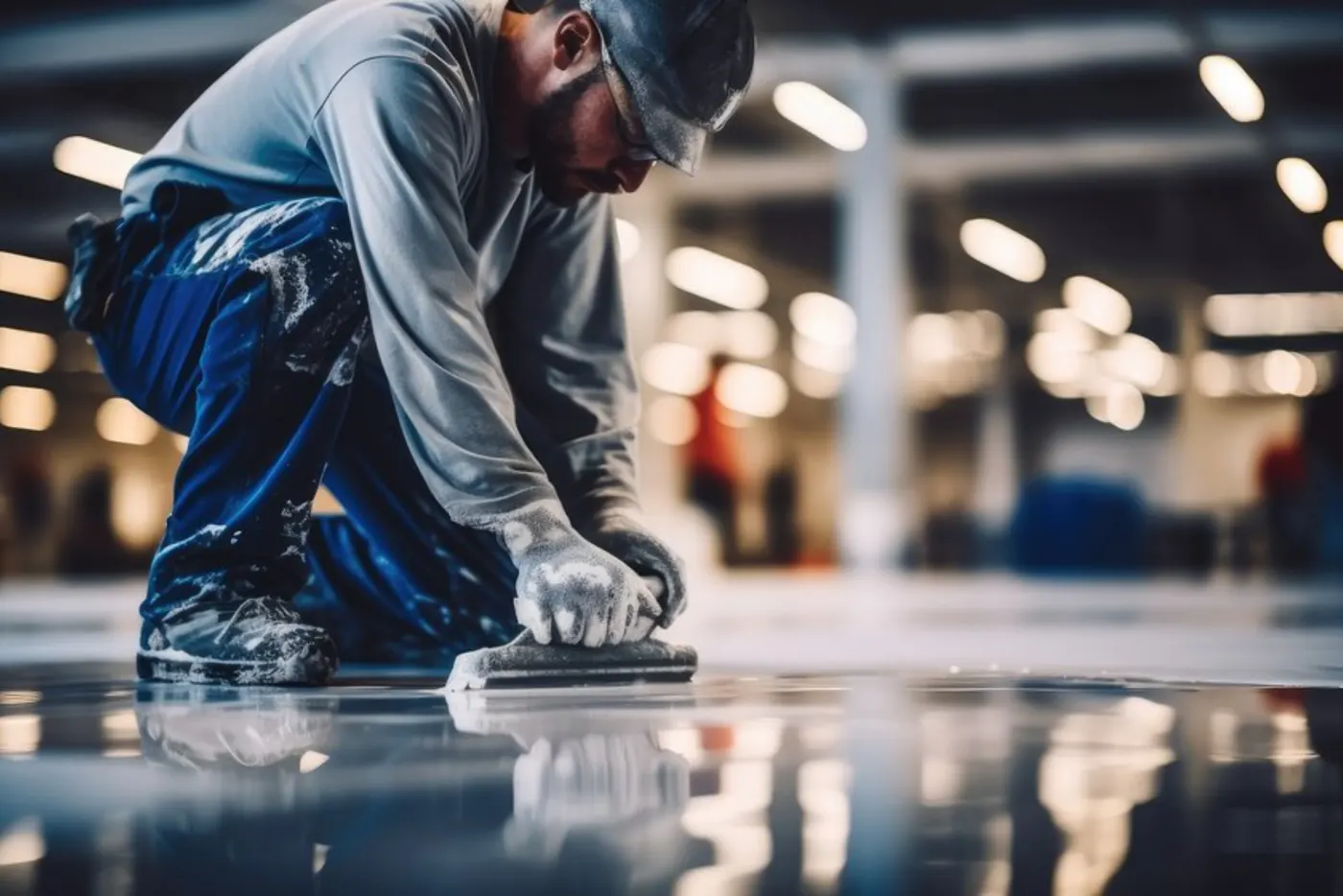
Grinding concrete is dusty, regulated work, and a polished floor has to be safe when wet. Our insurance certificates and policies are listed on the safety and accreditations page.
| Item | Detail |
|---|---|
| Slip rating | AS 4586 classifies new surfaces using a wet pendulum test (P0 to P5) and an oil-wet ramp test (R9 to R13). Polished concrete is tested wet after polishing. |
| Crystalline silica | Concrete dust contains crystalline silica. WorkSafe Victoria requires a hazard control statement before high-risk crystalline silica work starts. |
| Dust controls | Wet grinding, or dry grinding with on-tool extraction to an H-class vacuum, with the area closed off |
Price guide
Polished concrete is priced per square metre, and the cost depends mainly on how deep the grind goes and what is on the slab now. Small rooms cost more per square metre than large open floors, because set-up and edges take the same time either way.
| Item | From | What changes the price |
|---|---|---|
| Grind and seal | On quote | Sealer type and number of coats |
| Mechanically polished, cream or salt and pepper | On quote | Sheen level chosen |
| Full aggregate polish | On quote | Depth of grind and slab hardness |
| Coating or glue removal by grinding | On quote | Thickness and type of coating |
| Edges, crack repair and joint filling | On quote | Length of edges, cracks and joints |
Polished concrete does not hide a poor slab: large patches, deep cracks and old repairs will show, often more clearly than before. It also suits wet commercial kitchens and spill-heavy areas poorly, where a coating or tile copes better. For those rooms, look at epoxy and resin floors or commercial vinyl flooring instead.
Retail and showroom work often sits along the big trading roads in the south-east and inner east, and warehouse slabs in Dandenong, Braeside and the west. CBD fit-outs are usually booked at night. All areas are on our locations page.
Floor area, photos and the current covering help us price it; send them to info@goldenstar.au.
It is priced per square metre after we see the slab, and the depth of grind and any coatings to remove move the price most. A trial area may be quoted first on older slabs.
Daily dust mopping and regular scrubbing keep the sheen; burnishing is done on a schedule that suits the traffic. Worn lanes at doors may need a re-hone after some years, while grind and seal floors need their sealer redone more often.
Before any grinding starts, each crew member is inducted to your site and works under a written dust control plan.
Yes, though grinding is noisy, so night work in shared buildings needs the building manager's approval. Retail and office floors are often done overnight or across a weekend in stages.
Metropolitan Melbourne, from CBD fit-outs to warehouses in the west and south-east. Regional Victorian slabs can be quoted when crews are available.
Send photos and the floor area. We will check the slab, grind a trial patch where it helps, and give you a price for each finish level.